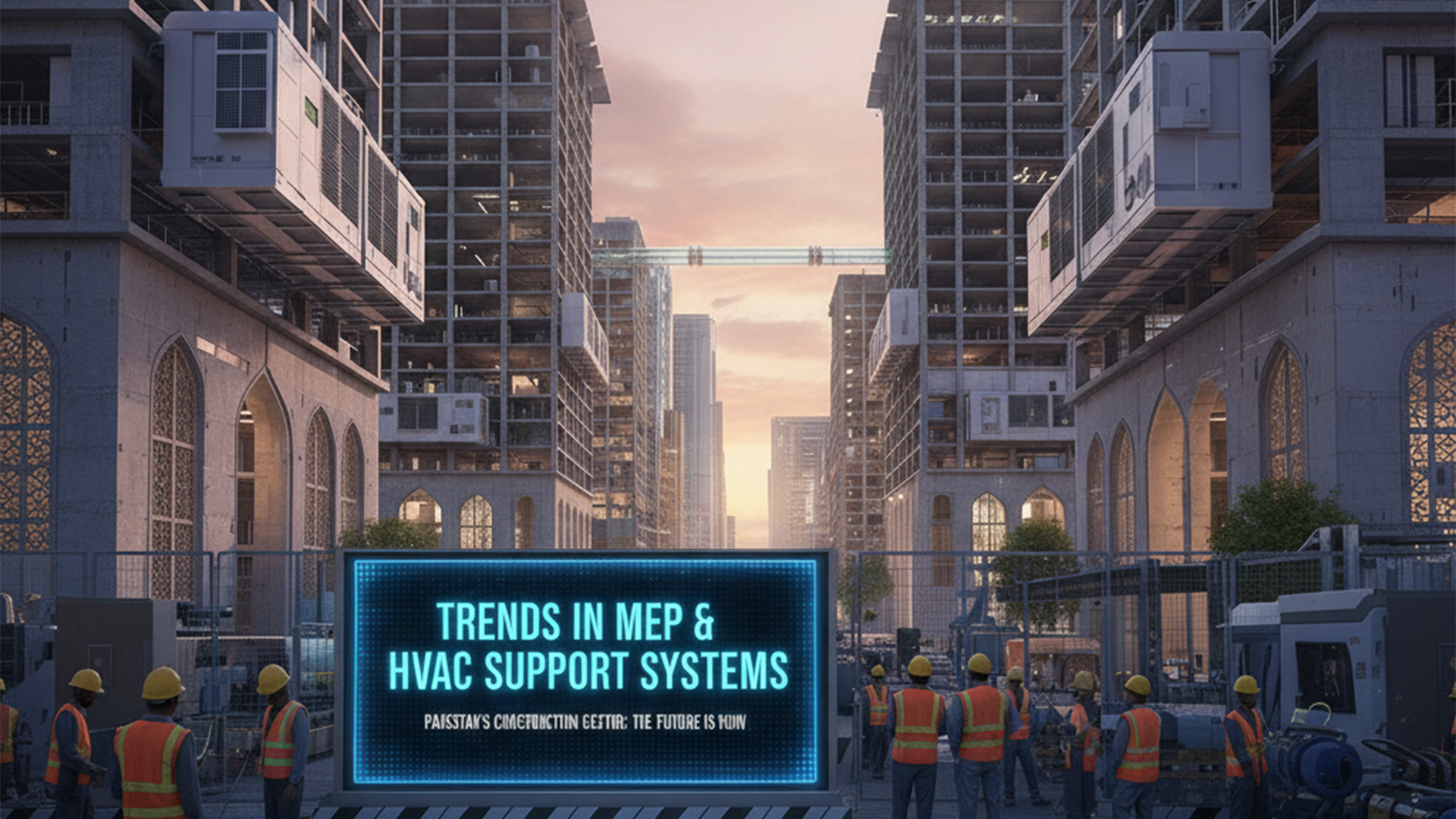
The construction industry in Pakistan is moving fast. Cities are growing, infrastructure projects are increasing, and new buildings are rising every day. Behind this rapid growth lies an important element that keeps everything running smoothly: MEP and HVAC support systems.
MEP stands for Mechanical, Electrical, and Plumbing, and HVAC refers to Heating, Ventilation, and Air Conditioning. Together, these systems form the backbone of modern buildings. They ensure safety, comfort, and efficiency in residential, commercial, and industrial projects.
But as construction evolves, so do the demands for better, smarter, and more sustainable support systems. Let’s take a closer look at the latest trends in MEP and HVAC support systems and why they matter for Pakistan’s construction sector.
Why MEP & HVAC Support Systems Are Crucial
Before diving into the trends, it’s important to understand why support systems play such a vital role:
- Safety: Proper fixing and support systems prevent accidents by holding heavy pipes, ducts, and cables securely.
- Durability: High-quality supports reduce wear and tear, extending the life of MEP and HVAC installations.
- Efficiency: Well-designed supports make installation easier and help systems run more efficiently.
- Sustainability: Modern solutions reduce material wastage and support green building practices.
With Pakistan’s urban population growing, these factors are becoming more important than ever.
Trend 1: Shift Towards Pre-Fabricated Support Systems
One of the biggest trends in construction worldwide—and now in Pakistan—is pre-fabrication. Pre-fabricated MEP and HVAC supports are manufactured off-site and then installed directly at the project location.
Benefits of Pre-Fabricated Supports:
- Faster installation saves time on large projects.
- Better quality control since parts are produced in controlled environments.
- Reduced labor costs at the construction site.
- Minimal errors and safer handling.
For developers in Pakistan working on massive housing schemes, shopping malls, and high-rise towers, pre-fabricated support systems are a game-changer.
Trend 2: Growing Demand for Seismic-Resistant Supports
Pakistan lies in a seismically active region. Cities like Islamabad, Karachi, and Quetta have experienced earthquakes in the past. This risk has led to a rising demand for seismic-resistant support systems.
These specialized supports are designed to:
- Protect HVAC ducts, pipes, and cables during an earthquake.
- Reduce the chances of collapse or system damage.
- Ensure continued building safety after a seismic event.
For hospitals, airports, and industrial facilities, seismic supports are not just an option, they are a necessity.
Trend 3: Focus on Green and Sustainable Solutions
Sustainability is no longer just a buzzword. With rising energy costs and climate change concerns, Pakistan’s construction sector is under pressure to adopt eco-friendly solutions.
Examples of Sustainable Support Systems:
- Supports made from recyclable materials.
- Lightweight systems that reduce transportation emissions.
- Energy-efficient HVAC duct supports that minimize air leakage.
By combining green building standards with efficient MEP supports, developers can reduce both costs and environmental impact. This trend is expected to grow stronger as Pakistan introduces stricter building codes for sustainability.
Trend 4: Modular and Adjustable Systems
Traditional support systems often required cutting, welding, or heavy modifications during installation. Now, modular and adjustable systems are gaining popularity in Pakistan.
Why Modular Systems Are Better:
- Easy to install and reconfigure without welding.
- Flexible enough to fit different project needs.
- Cost-effective for both small and large projects.
- Ideal for projects where speed and precision matter.
From shopping centers to office towers, modular support systems are making construction faster and more efficient.
Trend 5: Integration of Smart Technology
Smart buildings are becoming a reality in Pakistan, especially in cities like Lahore, Islamabad, and Karachi. To match this growth, smart MEP and HVAC support systems are entering the market.
Some modern supports now come with:
- Built-in sensors to detect vibration or stress.
- Monitoring systems that send real-time data.
- Early warning features to prevent failures.
This kind of technology ensures that facilities like hospitals, banks, and data centers stay operational without sudden breakdowns.
Trend 6: Corrosion-Resistant and Heavy-Duty Materials
Pakistan’s climate varies from coastal humidity in Karachi to dry heat in Multan. These conditions can damage ordinary support systems. That’s why there’s a growing demand for corrosion-resistant and heavy-duty materials like:
- Stainless steel supports for long-lasting durability.
- Galvanized coatings that prevent rust.
- Fire-resistant materials for added safety.
By investing in high-quality materials, contractors can reduce replacement costs and improve long-term performance.
Trend 7: Emphasis on Fire-Safety Standards
With the increasing number of high-rise buildings in Pakistan, fire safety has become a top priority. Modern MEP and HVAC support systems are being designed to meet stricter fire-safety codes.
Features of Fire-Safe Supports:
- Use of non-combustible materials.
- Supports that prevent ducts or pipes from collapsing during fire.
- Enhanced insulation to contain flames and smoke.
Builders and developers in Pakistan must keep this in mind as fire safety regulations become more stringent.
Trend 8: Cost-Effective Local Manufacturing
While many advanced systems are imported, Pakistan’s construction sector is now leaning towards locally manufactured support systems.
Benefits include:
- Reduced costs compared to imported products.
- Faster availability for ongoing projects.
- Support for local industries and jobs.
- Custom solutions tailored to Pakistan’s environment.
Local manufacturing also makes it easier to provide after-sales support and warranties.
What Pakistan’s Construction Sector Needs Next
As the construction industry grows, it must adopt these trends to stay competitive. Here’s what’s most needed right now:
- Awareness and Training – Engineers, architects, and contractors need training on the latest MEP and HVAC support solutions.
- Standardization – Pakistan should develop and enforce stronger codes for safety and sustainability.
- Investment in Smart Systems – Developers should invest in smart supports to improve long-term building performance.
- Focus on Sustainability – Green solutions should become the norm, not the exception.
By focusing on these areas, Pakistan can ensure safer, smarter, and more efficient construction projects.
Final Thoughts
The future of Pakistan’s construction sector depends on how quickly it adopts modern MEP and HVAC support systems. From modular solutions to seismic-resistant designs, these innovations are shaping safer, more sustainable, and cost-effective buildings.
As cities expand and infrastructure improves, the demand for advanced support systems will only grow. Developers, engineers, and policymakers must stay updated on these trends to ensure Pakistan’s construction industry keeps pace with global standards.