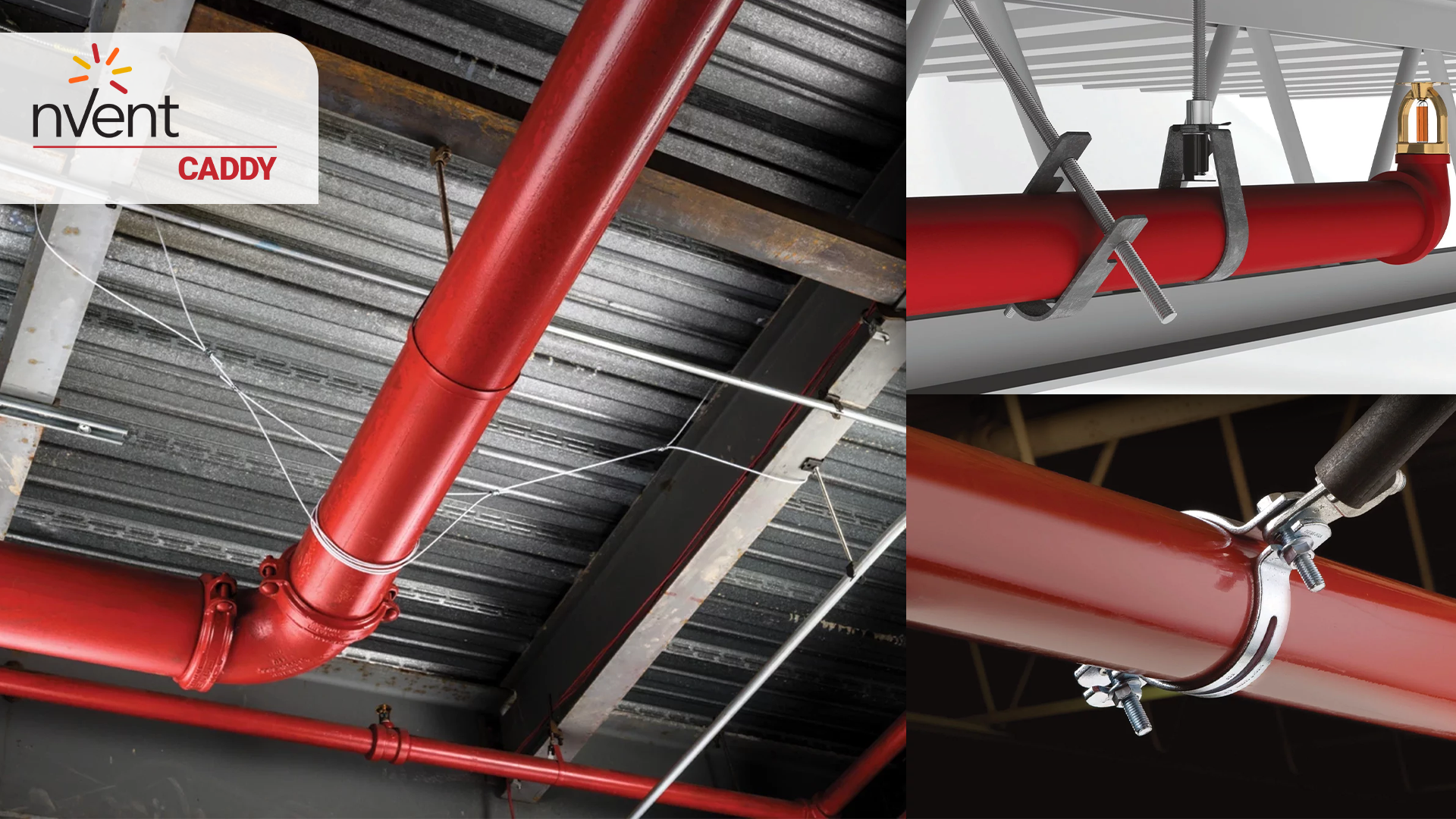
In Pakistan, we are no strangers to the power of nature. From the northern peaks of Gilgit-Baltistan to the bustling streets of Karachi, our geography sits on active fault lines. Major events like the 2005 and 2013 earthquakes taught us a vital lesson: it isn’t just the walls of a building we need to worry about but what is inside them.
For modern construction in Pakistan, Seismic Bracing Systems have moved from being an “extra” to an absolute necessity. At Ingenious Fixing Solutions, we partner with world-leading brands like Nvent Caddy to provide the hardware that keeps Pakistan’s infrastructure standing tall and functional during tremors.
What Exactly Is Seismic Bracing?
Imagine a large commercial mall or a hospital in Islamabad. Inside the ceilings, there are miles of water pipes, heavy AC ducts, and thick electrical cables. These are usually held up by standard hangers designed to fight gravity.
However, gravity only pulls down. An earthquake pushes sideways.
Seismic bracing is a specialized network of supports designed to resist these lateral (side-to-side) and longitudinal (front-to-back) forces. It acts as a “security system” for your building’s mechanical, electrical, and plumbing (MEP) services.
How Do These Systems Work?
The goal of the seismic bracing system is simple: make sure the equipment moves with the building, not against it. When the ground shakes, an unbraced pipe will swing like a pendulum. This swinging causes the pipe to snap, flood the building, or collapse on people below.
1. The Anchor Point
The system starts with a heavy-duty attachment to the building’s main structure, usually the reinforced concrete slab or steel beams. Because Ingenious Fixing Solutions provides Nvent Caddy solutions, these anchors are tested to ensure they won’t pull out of the concrete even when the building is vibrating.
2. The Brace (Rigid vs. Cable)
There are two ways to stop the “pendulum” effect:
- Rigid Bracing: Using steel struts to lock the pipe in place. This is incredibly strong and common in Pakistani industrial projects.
- Cable Bracing: Using high-strength steel cables. These are easier to install in the crowded ceilings of offices or hospitals where space is tight.
3. Load Distribution
Instead of the pipe taking the full hit of the earthquake’s energy, the brace catches that energy and sends it back into the building’s strong structural frame.
Why Is This Critical for Pakistan?
Pakistan is divided into different Seismic Zones (Zone 1 to Zone 4). Cities like Karachi, Quetta, and Islamabad are in high-risk zones.
Protecting Essential Services
In a disaster, a hospital must stay open. If a small earthquake breaks the fire sprinkler pipes or the oxygen lines, the hospital becomes useless. Ingenious Fixing Solutions focuses on providing Caddy products that meet international safety codes (like NFPA 13), ensuring that Pakistani hospitals, data centers, and factories remain operational after the shaking stops.
Preventing “Secondary” Disasters
Often, it isn’t the earthquake that causes the most damage, it’s the fire from broken gas lines or the flooding from burst water mains. Seismic bracing prevents these pipes from snapping, saving owners millions of Rupees in repair costs.
The Caddy Advantage via Ingenious Fixing Solutions
As the authorized provider in Pakistan, Ingenious Fixing Solutions brings Caddy’s global innovation to the local market. Why choose Caddy for your Pakistani project?
- Fast Installation: Labor costs and project timelines are tight in Pakistan. Caddy systems are designed to be installed quickly with fewer tools.
- No Guesswork: Every bracket and clamp comes with specific “load ratings.” This means engineers in Pakistan don’t have to guess if a support is strong enough; the data is already there.
- Visual Verification: Many Caddy seismic products have “break-away” bolts. When the bolt head snaps off during installation, it proves to the site inspector that the brace is tightened perfectly.
Where Should You Install Seismic Bracing?
If you are a developer or contractor in Pakistan, you should prioritize bracing for:
- Fire Sprinkler Systems: To ensure fire protection is active post-quake.
- HVAC Ductwork: Large ducts are heavy and dangerous if they fall.
- Electrical Cable Trays: To keep the power running for emergency lights and elevators.
- Plumbing & Gas: To prevent leaks and explosions
Conclusion
Seismic bracing is an investment in peace of mind. In a country like Pakistan, where seismic activity is a reality, we must build for the future. By using the high-quality Caddy systems of Nvent provided by Ingenious Fixing Solutions, you are not just following a code, you are protecting lives and your investment.
Are you working on a project in a high-risk seismic zone?
Ingenious Fixing Solutions can help you select the right Caddy systems for your specific needs.